

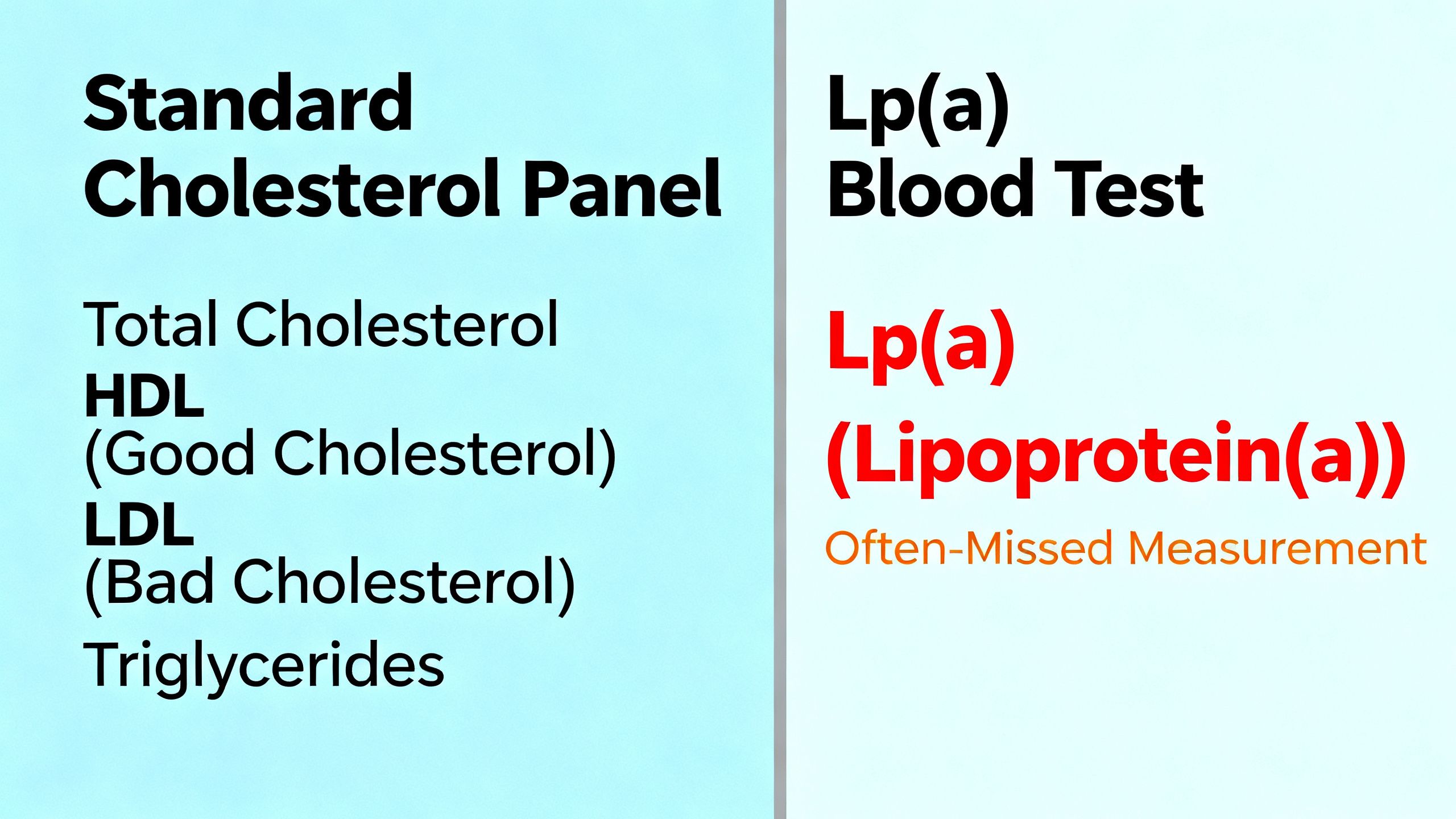
Lp(a) is a genetic cholesterol risk factor that a standard lipid panel does not measure—and most people have never had it checked. A person can have an acceptable LDL result while still carrying elevated Lp(a), which may add to cardiovascular risk. Learn more about the standard cholesterol and lipid panel and why it does not provide the full picture.
What Is Lipoprotein(a)?
Lipoprotein(a), usually written as Lp(a), is a lipoprotein particle in the blood. It carries cholesterol and has structural features that distinguish it from LDL. Like LDL, it can contribute to cholesterol buildup in artery walls, but Lp(a) also has properties that may affect clotting and inflammation.
Unlike many health markers, Lp(a) levels are largely determined by genetics. Your level is generally established early in life and tends to remain relatively stable. This makes Lp(a) different from cholesterol values that may shift more noticeably with diet, exercise, weight changes, or medications.
Lp(a) is also different from ApoB. ApoB reflects the number of cholesterol-containing particles that can contribute to plaque, while Lp(a) measures a specific genetically influenced lipoprotein. Read more about what ApoB is and why it matters.
Why Your Regular Cholesterol Panel Does Not Show This
A standard lipid panel typically reports total cholesterol, HDL cholesterol, LDL cholesterol, and triglycerides. It does not usually include Lp(a), so a routine result cannot tell you whether this inherited risk factor is elevated.
About 1 in 5 people have high Lp(a), yet many do not know their level because it is not part of ordinary cholesterol screening. A separate blood test is needed.
Normal vs High Lp(a) Levels
Lp(a) may be reported in milligrams per deciliter (mg/dL) or nanomoles per liter (nmol/L). These units are not directly interchangeable without information about the test method and particle size, so use the reference range provided by the laboratory and discuss the result with your doctor.
Lp(a) range | Classification |
|---|---|
Under 30 mg/dL | Normal |
30–50 mg/dL | Borderline/high risk |
Above 50 mg/dL | Highest risk |
Above 100 nmol/L | High |
A result above the laboratory’s risk threshold does not diagnose heart disease by itself. It identifies an inherited risk factor that should be considered alongside LDL, blood pressure, blood sugar, family history, smoking status, and other findings. See the Lp(a) blood test information from Direct Care Labs for additional context.
Who Should Get Tested
People with a family history of early heart disease
Testing is especially useful when a parent, sibling, or child had premature coronary artery disease, a heart attack, or another cardiovascular event at a relatively young age. An elevated Lp(a) may help explain cardiovascular risk that is not obvious from a standard lipid panel. If your family has a pattern of early heart disease, ask your doctor whether close relatives should also be tested.
People with personal cardiovascular history and adults seeking baseline screening
Consider Lp(a) testing if you have cardiovascular disease that seems out of proportion to your other risk factors, or if you have had an event despite an apparently reasonable LDL level. The National Lipid Association recommends that every adult have Lp(a) measured at least once.
In San Antonio, Texas, Direct Care Labs offers Lp(a) testing for $39, with results in 1–2 business days. No physician order or insurance is needed. Texas law permits consumers to order their own lab testing through certified providers such as Direct Care Labs. You can also review how to get lab tests in San Antonio without a doctor’s order before scheduling.
What Causes High Lp(a)
High Lp(a) is primarily a genetic risk factor. The LPA gene influences how much lipoprotein(a) your body produces, which is why levels can run in families and remain fairly consistent over time.
Diet and exercise are valuable for cardiovascular health, but they do not directly lower Lp(a) in the way they may improve LDL cholesterol, triglycerides, blood pressure, or blood sugar. Avoid claims that supplements or lifestyle changes can reliably normalize an inherited Lp(a) level. For broader preventive monitoring, review the role of lab testing as preventive healthcare.
What to Do If Your Lp(a) Is High
An elevated result is a reason to take the rest of your cardiovascular risk profile seriously—not a reason to panic. Work with your doctor to assess your overall risk and develop a prevention plan.
Key steps may include:
Manage LDL cholesterol: Your doctor may recommend lifestyle measures and, when appropriate, medications such as statins or PCSK9 inhibitors. These treatments address overall cardiovascular risk, even though they are not dedicated Lp(a)-lowering drugs.
Control blood pressure: Regular monitoring and prescribed treatment can reduce another important cardiovascular risk factor.
Manage blood sugar: Address diabetes or prediabetes through a plan tailored to your health needs.
Avoid tobacco and stay physically active: These measures support cardiovascular health even though they do not directly lower Lp(a).
Consider family testing: Because Lp(a) is inherited, close family members may want to discuss testing with their doctors.
Review the result clinically: Lp(a) is one part of risk assessment. Your doctor may consider LDL, ApoB, blood pressure, medical history, and other factors together.
There is currently no FDA-approved medication specifically designed to lower Lp(a). Treatment generally focuses on reducing other modifiable cardiovascular risks while researchers continue evaluating dedicated therapies.
Direct Care Labs provides self-ordered lab testing in San Antonio, Texas, including an Lp(a) test. You can schedule an Lp(a) test without a physician order or insurance, then discuss the results with your healthcare professional.
Frequently Asked Questions
Is Lp(a) the same as LDL?
No. LDL and Lp(a) are different lipoproteins. A standard lipid panel commonly reports LDL, but it usually does not report Lp(a). A person may have a normal LDL and an elevated Lp(a), or elevated levels of both.
Can I lower Lp(a) with diet or exercise?
Not directly in a reliable way. Lp(a) is largely genetically determined. A heart-healthy diet, regular exercise, healthy weight, and tobacco avoidance still matter because they can improve other cardiovascular risk factors, including LDL, blood pressure, and blood sugar.
How often should I test Lp(a)?
For most people, a once-in-a-lifetime Lp(a) test is usually sufficient because levels are genetically determined and relatively stable. Your doctor may recommend repeat testing in certain clinical situations or if the original result was difficult to interpret.
Do I need to fast for an Lp(a) test?
Fasting is often not required for an isolated Lp(a) test, but preparation instructions can vary when Lp(a) is ordered with a lipid panel or other tests. Follow the instructions provided by the laboratory or your healthcare professional.
What is a dangerous Lp(a) level?
There is no single result that determines whether an individual will develop heart disease. Under 30 mg/dL is generally considered normal, 30–50 mg/dL indicates borderline/high risk, and above 50 mg/dL represents the highest-risk range in the reference framework used here. Above 100 nmol/L is considered high. Discuss the number, its units, and your overall risk profile with your doctor.
Is it legal to order an Lp(a) test myself in Texas?
Yes. Texas law permits consumers to order their own lab testing through certified providers such as Direct Care Labs. In San Antonio, Direct Care Labs offers Lp(a) testing for $39, with results in 1–2 business days, without a physician order or insurance. You can learn more about affordable online medical testing without a doctor referral.
An Lp(a) result is not a substitute for medical advice. Discuss your results with your doctor, particularly if you have a personal or family history of cardiovascular disease or a result above the laboratory’s risk threshold.