

Most people are told that their vitamin D result is “normal” or “low” without being shown what their exact number means. A blood test for 25-hydroxyvitamin D, also called 25(OH)D, gives you a number that can be compared with commonly used ranges. This guide explains what vitamin D levels generally mean and how to interpret results in ng/mL. For background on testing, see the Vitamin D Test from Direct Care Labs.
Vitamin D Levels: What Each Range Means
The ranges below are commonly used for interpreting 25(OH)D results. They are a reference, not a diagnosis, and your laboratory or clinician may use slightly different thresholds.
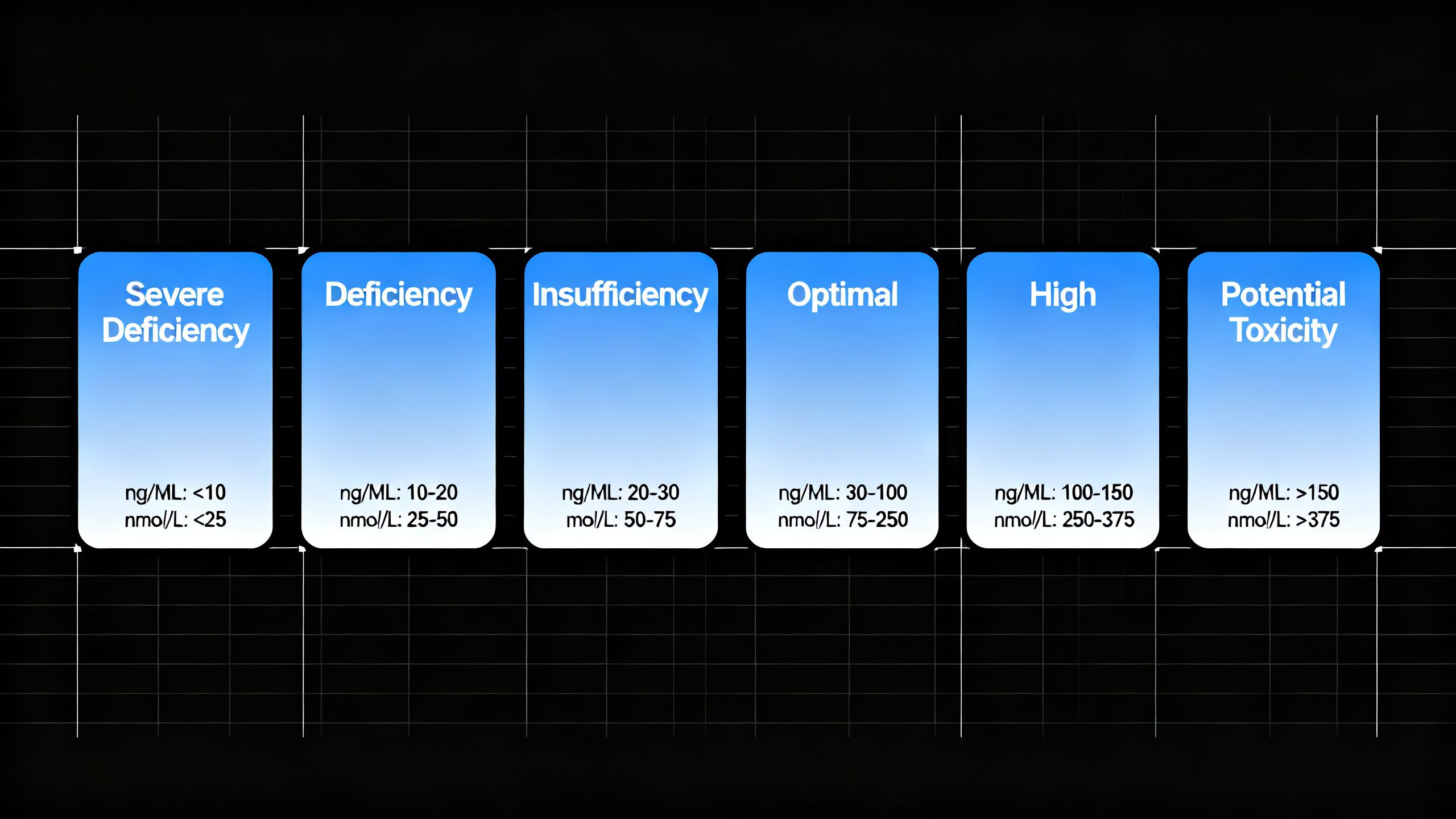
Range (ng/mL) | Classification | What it generally means |
|---|---|---|
Under 10 ng/mL | Severe deficiency | A markedly low vitamin D level that may require prompt discussion with a healthcare provider. |
10–19 ng/mL | Deficient | Vitamin D is below the range generally considered adequate and may warrant evaluation and treatment planning. |
20–29 ng/mL | Insufficient or borderline | The result may be adequate under some guidelines but below the target used by others. |
30–50 ng/mL | Sufficient or normal for most labs | This is a commonly used target range for vitamin D status. |
Above 100 ng/mL | Potential toxicity concern | A substantially high result may indicate excessive supplementation and should be reviewed with a healthcare provider. |
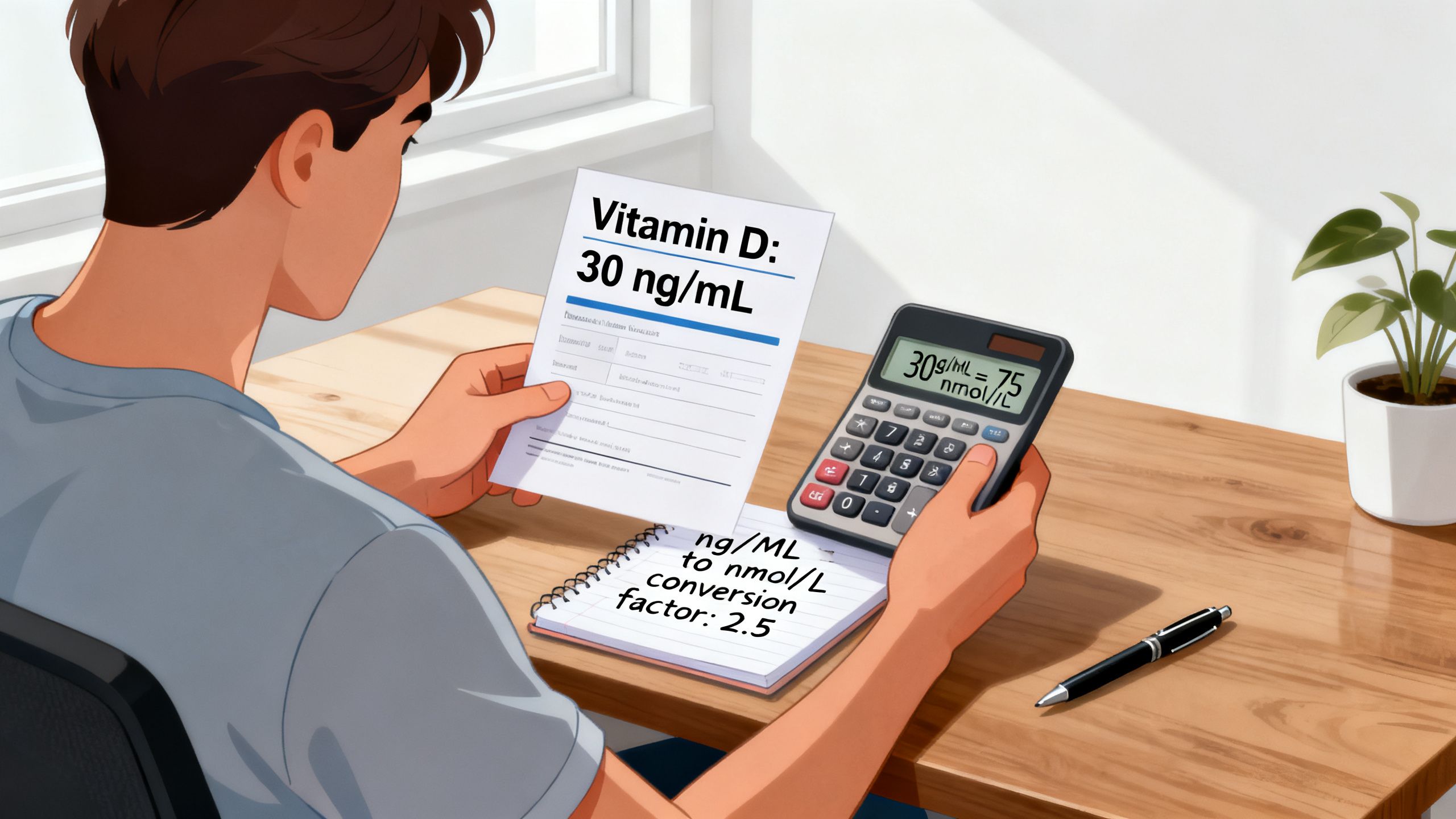
To convert units, multiply ng/mL by 2.5 to estimate nmol/L. For example, 20 ng/mL is approximately 50 nmol/L. The vitamin D testing page provides additional details about the test and ordering process.
Severe Deficiency and Deficient Range: Under 20 ng/mL
A vitamin D level under 10 ng/mL is generally classified as severe deficiency. A result from 10–19 ng/mL is commonly classified as deficient. These results can occur for many reasons, including limited sun exposure, low dietary intake, absorption problems, or certain medications.
The usual next step is to discuss the result with a healthcare provider rather than choosing a high-dose supplement on your own. A provider may review your health history, diet, medications, calcium status, kidney function, and symptoms before recommending a treatment plan. Retesting may be appropriate after treatment or a meaningful change in supplementation.
Read more about what happens when vitamin D is too low or too high before interpreting a result in isolation.
Insufficient or Borderline Range: 20–29 ng/mL
A result between 20 and 29 ng/mL is often described as insufficient or borderline. This is where interpretation can vary most. Some clinical guidelines consider levels of 20 ng/mL or higher adequate for many people, while other clinicians use 30 ng/mL as a practical target.
Your next step may be monitoring, reviewing dietary and sun exposure patterns, or discussing supplementation with a provider. The appropriate response depends on factors such as age, bone health, pregnancy, medical conditions, and medications.
The Direct Care Labs guide to vitamin D testing explains when checking your level may be useful.
Sufficient or Normal Range: 30–50 ng/mL
A vitamin D level from 30 to 50 ng/mL falls within a commonly used sufficient or normal range. Many laboratories and clinicians use this range as a general target, although the ideal result can vary by individual circumstances.
A result in this range does not automatically mean that symptoms are caused by vitamin D or that every aspect of your health is optimal. Continue any treatment plan recommended by your provider, and avoid increasing supplements simply to reach a higher number.
For practical guidance about sunlight and vitamin D, review How Much Sun Do You Really Need for Healthy Vitamin D Levels?.
High Range and Toxicity Concern: Above 100 ng/mL
A vitamin D result above 100 ng/mL raises concern about excessive vitamin D exposure, particularly from supplements. Very high vitamin D can contribute to elevated calcium levels, which may cause symptoms such as nausea, vomiting, constipation, unusual thirst, frequent urination, weakness, or confusion.
Do not take additional vitamin D to correct a high result. Contact your healthcare provider promptly for individualized guidance, especially if you are taking high-dose supplements or have symptoms. A high result should be interpreted alongside calcium and other relevant health information.
See the vitamin D level reference on low and high results for more context.
Why Guidelines Don’t Fully Agree
There is no single cutoff that every organization uses for vitamin D sufficiency. The Endocrine Society has commonly used a target of at least 30 ng/mL in clinical discussions. The Institute of Medicine, now part of the National Academies, has considered 20 ng/mL or higher adequate for most healthy people.
That difference does not mean your result is being measured incorrectly. It reflects different approaches to defining adequacy, disease prevention, and individual risk. Your laboratory’s reference range, medical history, bone health, and reason for testing all matter.
This is also why a result such as 22 ng/mL may be called “adequate” by one source and “insufficient” by another. A vitamin D test should be interpreted with the rest of your clinical information rather than by one cutoff alone.
What Affects Your Number
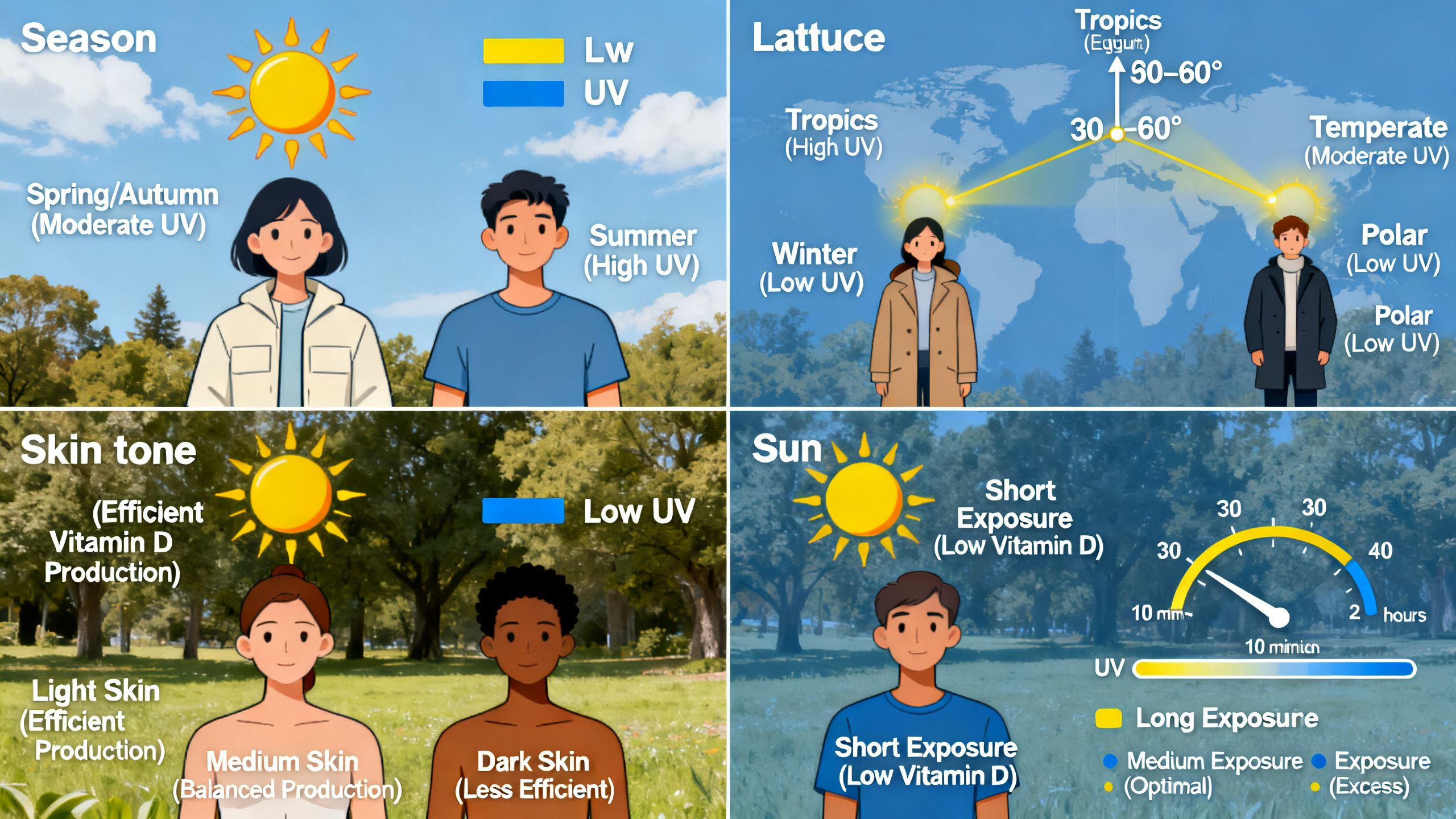
Vitamin D levels can change because of several factors:
Season: Levels may be lower after winter or periods of limited outdoor activity.
Latitude: People living farther from the equator may receive less UVB exposure during parts of the year.
Skin tone: Higher melanin levels can reduce the skin’s production of vitamin D from sunlight.
Age: The skin generally becomes less efficient at producing vitamin D with age.
Sun exposure: Clothing, sunscreen, time outdoors, and indoor routines all affect exposure.
Diet and supplements: Food intake and supplement dose can raise or lower the measured result.
Health conditions and medications: Some digestive, liver, kidney, or medication-related factors can affect vitamin D metabolism or absorption.
Because of these variables, a single number is a snapshot. A result can change between seasons or after a change in supplementation.
What To Do With Your Result
Use your range as a starting point, not as a diagnosis:
Under 10 ng/mL: Discuss the result with a healthcare provider promptly. Do not self-treat with very high doses without guidance.
10–19 ng/mL: Ask a provider whether supplementation, additional evaluation, and follow-up testing are appropriate.
20–29 ng/mL: Review the result in light of your health history and the guideline used by your laboratory or clinician.
30–50 ng/mL: Continue your current plan unless your provider recommends a change. More is not necessarily better.
Above 100 ng/mL: Contact a healthcare provider about possible excessive supplementation and whether further evaluation is needed.
Direct Care Labs in San Antonio, Texas, offers vitamin D testing for $25, with results in 1–2 business days. No physician order or insurance is needed. Texas law permits consumers to order their own laboratory testing through certified providers. You can learn more about ordering a vitamin D test and then review the result with your healthcare provider.
This information is not a substitute for medical advice. Discuss your results with your doctor, especially at the extremes of this range or if you have symptoms, take high-dose supplements, are pregnant, or have a condition affecting calcium or vitamin D metabolism.
Frequently Asked Questions
What is a dangerous vitamin D level?
A level under 10 ng/mL is generally considered severe deficiency and deserves medical attention. A level above 100 ng/mL raises concern about possible toxicity, particularly when caused by supplements. The result should be evaluated with your symptoms, medications, calcium level, and overall health.
How fast can I raise my vitamin D level?
The answer depends on your starting level, supplement dose, absorption, body size, medical conditions, and consistency. Levels usually change over weeks rather than overnight. Ask a healthcare provider what dose is appropriate and whether follow-up testing is needed; avoid taking large doses without guidance.
Do I need to fast for a vitamin D test?
Fasting is generally not required for a 25-hydroxyvitamin D blood test. Follow any specific instructions from the laboratory or your healthcare provider, particularly if other blood tests are being collected at the same appointment.
How often should I retest vitamin D?
There is no universal retesting schedule. A provider may recommend testing after a period of supplementation, a dose change, or treatment for deficiency. Testing too soon may not show the full effect of a change. Your follow-up timing should be based on your starting level and treatment plan.
Does the season affect vitamin D results?
Yes. Levels may be higher after periods of regular sun exposure and lower during winter or times spent mostly indoors. Season is only one factor; latitude, skin tone, age, clothing, sunscreen use, diet, and supplements can also affect the result.
Is 20 ng/mL normal or low?
It depends on the guideline and laboratory reference range. The Institute of Medicine has considered 20 ng/mL adequate for most healthy people, while the Endocrine Society has commonly used 30 ng/mL or higher as a target. A result of 20 ng/mL is best discussed in context rather than labeled universally normal or deficient.