

What Lab Tests Should You Get for Hair Loss? (Complete Guide)
Noticing more hair on your brush or in the shower drain can be worrying. It’s easy to jump to conclusions, but often, hair loss has a clear explanation that can be found with the right tests. This guide will walk you through the different lab tests for hair loss, from simple checks to more involved blood work, to help you and your doctor figure out what’s going on and how to get your hair back on track.
Key Takeaways
-
Your doctor will start with a clinical assessment, asking about your hair loss pattern, how long it’s been happening, and reviewing your medications and lifestyle.
-
Non-invasive tests like the hair pull test, tug test, and trichoscopy can give early clues about the type of hair loss without needing blood work.
-
Essential blood lab tests for hair loss often include a complete blood count (CBC) for anemia, iron and ferritin levels, thyroid function (TSH), and vitamin levels like D and B12.
-
Hormonal imbalances and autoimmune conditions can also cause hair loss, sometimes requiring sex hormone panels or tests like the ANA.
-
In some cases, specialized tests like blood glucose checks, scalp cultures for infections, or even a scalp biopsy might be needed to get a definitive diagnosis.
Initial Clinical Assessment For Hair Loss
Before we even think about blood work or scalp biopsies, the first step in figuring out why your hair is thinning is a good old-fashioned chat and look-over with your doctor. This initial assessment is super important because it helps narrow down the possibilities and guides what tests, if any, you might need. It’s all about gathering clues.
Understanding Your Hair Loss Pattern
How your hair is falling out tells a story. Is it thinning all over, or are there distinct bald patches? Maybe your hairline is receding? Knowing the pattern is a big hint. For example, a general thinning might point to something like telogen effluvium or nutritional issues, while distinct patches could suggest alopecia areata. A receding hairline is often linked to androgenetic alopecia, also known as male or female pattern baldness. Your doctor will look at:
-
Overall scalp density: How much hair seems to be missing across the whole head.
-
Frontal hairline: Is it moving back?
-
Specific areas: Are there bald spots, particularly on the crown or sides?
-
Other body hair: Sometimes changes in eyebrows or body hair can be related.
Duration and Speed of Shedding
When did you first notice the hair loss, and how quickly is it progressing? A sudden, massive shedding event is different from a slow, gradual thinning that’s been happening for years. For instance, a rapid increase in shedding after a stressful period or illness often points to telogen effluvium. A slow, steady loss might be more indicative of genetic factors. Keep track of:
-
Onset: When did you first notice it?
-
Progression: Is it getting worse quickly or slowly?
-
Associated factors: Did it start after a specific event like surgery, childbirth, or a new medication?
Reviewing Medications and Lifestyle Factors
So many things we do and take can affect our hair. Your doctor will want to know about:
-
Medications: Certain drugs, from blood thinners to antidepressants, can cause hair loss as a side effect. It’s important to list everything you’re taking, including over-the-counter stuff and supplements.
-
Diet: Are you eating a balanced diet? Extreme dieting or a lack of certain nutrients can definitely impact hair health. We’ll get into specific nutrient tests later, but your general eating habits are a starting point.
-
Stress: High levels of physical or emotional stress are a common trigger for temporary hair shedding.
-
Hair care practices: Believe it or not, how you treat your hair – tight hairstyles, harsh chemicals, excessive heat – can sometimes contribute to breakage or even hair loss.
This initial conversation and physical check-up are foundational. It’s where your doctor starts piecing together the puzzle of your hair loss, deciding which specific tests might be most helpful for your unique situation. It’s a key part of the comprehensive approach to diagnosing hair loss.
Don’t be surprised if your doctor also does a simple hair pull test right there in the office. It’s a quick way to see how easily hairs are coming out and gives them another piece of information to work with.
Non-Invasive Scalp and Hair Tests
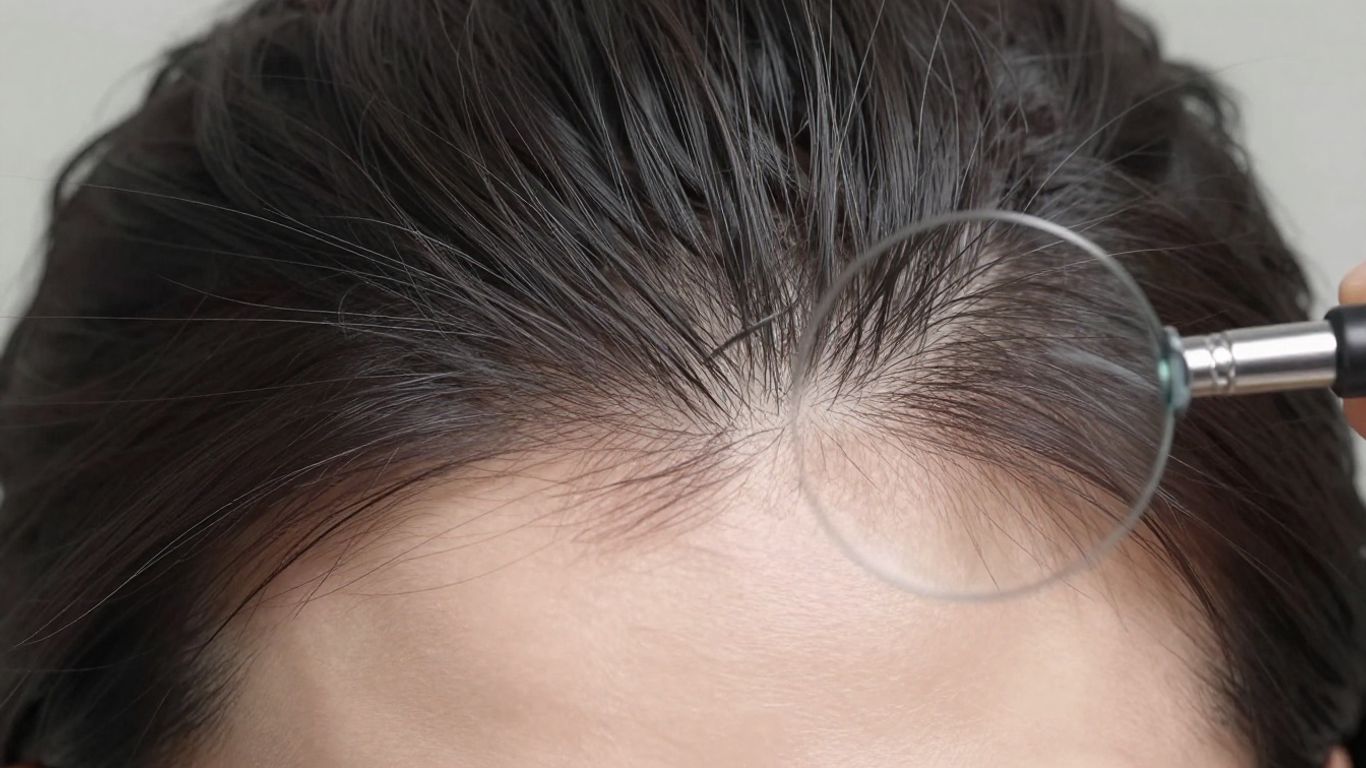
Sometimes, you don’t need a needle or a lab to get a good idea of what’s going on with your hair. There are a few simple tests you can do right there in the doctor’s office, or even at home, that give pretty useful clues. These are great because they don’t involve any blood draws or complicated procedures.
The Hair Pull Test
This is a pretty straightforward one. Your doctor will take a small section of your hair, maybe about 50 to 60 strands, and give it a gentle tug. They do this in a few different spots on your scalp. If more than a few hairs come out easily with this gentle pull, it usually means your hair is in an active shedding phase. This can point towards conditions like telogen effluvium, which is basically temporary hair shedding, or an active phase of alopecia. It’s a quick way to see if shedding is happening right now.
The Hair Tug Test
This test is a bit different. Instead of pulling from the root, the doctor holds a section of hair in the middle and then tugs on the ends. The idea here is to check the strength of the hair shaft itself. If the hairs break off easily during this test, it suggests there might be an issue with the hair’s structure. Think of things like brittle hair or conditions that make the hair shaft weak.
Standardized Hair Washing Test
This one you might even be able to do yourself before your appointment. You’d collect all the hairs that fall out when you wash your hair over a specific period, usually a couple of washes. Then, you count them. A significantly higher number of shed hairs than what’s considered normal can help quantify the shedding and track if it’s getting better or worse over time. It’s a good way to get a baseline number.
Trichoscopy for Detailed Scalp Examination
This is where things get a bit more high-tech, but still non-invasive. Trichoscopy uses a special magnifying device, kind of like a dermatoscope, to look closely at your scalp and hair follicles. It can show things like the diameter of your hair shafts, the health of the follicle openings, and the overall condition of your scalp surface. It’s really helpful for telling different types of hair loss apart, like seeing if hairs are thinning out gradually (common in male or female pattern baldness) or if there are other signs like inflammation or specific follicle changes. Often, trichoscopy can give a really good idea of the problem without needing a biopsy.
These non-invasive tests are often the first step in figuring out hair loss. They’re quick, painless, and can provide a lot of information about whether your hair is actively shedding, if the hair shaft is weak, or if there are visible issues on the scalp itself. They help guide whether more in-depth testing is needed.
Essential Blood Lab Tests For Hair Loss
Sometimes, the reason your hair is thinning or falling out isn’t just on the surface. It can be a sign that something else is going on inside your body. That’s where blood tests come in. They’re like a detective for your health, helping us figure out if a deficiency or an imbalance is causing your hair woes. It’s not always about what you’re doing, but what your body might be lacking or dealing with internally.
Complete Blood Count (CBC) For Anemia
A CBC is a pretty standard test that looks at the different cells in your blood. It checks your red blood cells, white blood cells, and platelets. Why is this important for hair? Well, if your red blood cells are low, or if the hemoglobin is down, it could mean you have anemia. Anemia, especially the kind caused by low iron, means your hair follicles aren’t getting enough oxygen to do their job properly. This can definitely lead to shedding.
Iron and Ferritin Studies for Deficiency
Speaking of iron, this is a big one for hair loss. Iron is needed to make hemoglobin, which, as we just talked about, carries oxygen. But it’s not just about the iron circulating in your blood; it’s also about your body’s storage of iron. That’s where ferritin comes in. Ferritin is a protein that stores iron. Low ferritin levels mean your body’s iron reserves are depleted, which can really weaken your hair and make it fall out more easily. Doctors often look at ferritin levels because they can drop before actual anemia shows up on a CBC. If your ferritin is low, it’s a strong clue that iron deficiency might be contributing to your hair loss, potentially causing telogen effluvium, a type of shedding. You can check out iron levels for more details.
Thyroid Function Tests (TSH)
Your thyroid gland is like the body’s thermostat, controlling metabolism. If it’s not working right, it can mess with a lot of things, including your hair growth cycle. Both an underactive thyroid (hypothyroidism) and an overactive thyroid (hyperthyroidism) have been linked to hair thinning. A TSH (Thyroid-Stimulating Hormone) test is usually the first step to see if your thyroid is functioning properly. If it’s off, your doctor can then explore further thyroid testing.
Vitamin Level Testing (D, B12)
We often hear about vitamins for overall health, but they’re pretty important for your hair too. Deficiencies in certain vitamins, particularly Vitamin D and Vitamin B12, can contribute to hair loss. Vitamin D plays a role in hair follicle cycling, and low levels have even been associated with conditions like alopecia areata. B12 is also vital for cell production, including the cells that make up your hair. If your diet is lacking or you have trouble absorbing these vitamins, it could show up in your hair.
It’s important to remember that blood tests are just one piece of the puzzle. Your doctor will consider these results alongside your medical history, the pattern of your hair loss, and other physical signs to get the full picture.
Hormonal and Autoimmune Lab Tests
Sometimes, hair loss isn’t just about what you’re eating or how stressed you are; it can be a sign that your hormones are out of whack or your immune system is a bit confused. That’s where these next lab tests come in. They help us look deeper into what might be going on internally.
Sex Hormone Panel
This one is particularly relevant if you’re a woman experiencing hair thinning, especially if you have irregular periods or signs of excess male hormones (like acne or unwanted facial hair). For men, it can help figure out if pattern baldness is linked to hormonal changes. We’re looking at things like testosterone, DHEA-S, androstenedione, LH, FSH, and prolactin. An imbalance in these can really mess with your hair growth cycle.
Antinuclear Antibody (ANA) Test
If your doctor suspects an autoimmune condition might be causing your hair loss, like alopecia areata (where the immune system attacks hair follicles) or even lupus, an ANA test is a good starting point. It checks for antibodies that can signal your immune system is mistakenly targeting your own body’s tissues, including those in your scalp. It’s a way to see if your body’s defense system is working overtime in the wrong direction.
Thyroid Autoimmune Markers
We already talked about general thyroid function, but sometimes the issue isn’t just an underactive or overactive thyroid, but rather the immune system attacking the thyroid itself. Tests for anti-TPO and anti-thyroglobulin antibodies can identify this. Autoimmune thyroid disease is a common culprit behind diffuse hair thinning, so checking these markers can be really informative if your regular thyroid tests are borderline or if there’s a strong suspicion of an autoimmune link.
When to Consider Specialized Lab Tests
Sometimes, the usual blood work and scalp checks don’t quite nail down the reason for your hair loss. That’s when your doctor might suggest looking a bit deeper with some more specialized tests. These aren’t typically the first things ordered, but they can be super helpful when the cause is a bit tricky.
Blood Glucose Levels for Diabetes
Did you know that uncontrolled blood sugar can actually mess with your hair? Studies have shown a connection between high blood sugar, especially in type 2 diabetes, and noticeable hair loss, particularly on the scalp. If you have other signs of diabetes or your doctor suspects it might be playing a role, a simple blood glucose test can check your levels. It’s a pretty standard test, usually done after you haven’t eaten for a while.
Scalp Cultures for Fungal Infections
If your scalp is itchy, red, or has flaky patches, a fungal infection like tinea capitis (ringworm of the scalp) could be the culprit. It’s more common in kids but can happen to adults too. To figure out if it’s a fungus, your doctor might take a small scraping from your scalp or even do a culture. This involves collecting a sample and sending it to a lab to see if any fungi grow. It’s a straightforward way to diagnose and treat this specific type of hair loss.
Hormone Stimulation Tests for Adrenal Issues
In rarer cases, hair loss can be linked to problems with your adrenal glands, which sit on top of your kidneys and produce important hormones. Conditions like Cushing’s syndrome, where your body makes too much cortisol, can sometimes lead to hair thinning. If your doctor suspects an adrenal issue based on your symptoms and other test results, they might order a hormone stimulation test. These tests usually involve giving you a hormone (like ACTH) and then measuring your body’s response by checking hormone levels at different times. It helps see how well your adrenal glands are working.
It’s important to remember that these specialized tests are usually reserved for specific situations. Your doctor will consider your overall health, your specific symptoms, and the results of your initial evaluations before deciding if they’re necessary. Don’t jump to conclusions; let your healthcare provider guide the diagnostic process.
Scalp Biopsy: A Diagnostic Tool
Sometimes, even after all the blood work and those in-office tests, the reason for your hair loss isn’t totally clear. Or maybe your doctor suspects a type of hair loss that causes scarring on the scalp. That’s when a scalp biopsy might be recommended. It’s a small procedure where a tiny piece of your scalp skin, usually about 4 millimeters wide, is taken out under local anesthetic. This sample is then sent to a lab for a really close look under a microscope. This is often the most definitive way to diagnose certain types of alopecia.
Indications for Scalp Biopsy
So, when exactly does a doctor decide a biopsy is the way to go? Usually, it’s reserved for those trickier cases where other tests haven’t given a clear answer, or when there’s a suspicion of cicatricial alopecia, which is hair loss that leads to scarring and permanent follicle damage. Think conditions like lichen planopilaris or frontal fibrosing alopecia. It’s not typically the first step, but rather a tool for when you need more detailed information.
Understanding Vertical Sections
When the lab gets the biopsy sample, they can prepare it in a couple of ways. One way is to make vertical sections. Imagine slicing a loaf of bread straight down. This type of cut lets the pathologist see the entire length of the hair follicles, from the top of the scalp all the way down. It’s really helpful for spotting inflammation in the skin layers or around the hair follicle itself.
Understanding Horizontal Sections
Another way to prepare the sample is through horizontal sections. This is like looking at the loaf of bread from the top, seeing slices across. This method is great for counting the number of hair follicles in a given area and looking at their different stages of growth (growing, resting, shedding). It also helps determine the ratio of fine, vellus hairs to thicker, terminal hairs, which can be a key clue in diagnosing certain types of hair loss. Getting both vertical and horizontal sections from a single biopsy often gives the most complete picture. If you’re concerned about your hair loss, discussing the potential need for a scalp biopsy with your doctor is a good idea.
Wrapping Up: What’s Next for Your Hair?
So, we’ve gone over a bunch of tests that can help figure out why your hair might be thinning or falling out. It can seem like a lot, but remember, your doctor is the one who puts all the pieces together. They’ll look at your history, do an exam, and then decide which tests, if any, make sense for you. It might be a simple pull test, some blood work, or maybe something more involved like a scalp biopsy. The main thing is not to panic. Getting a clear picture of what’s going on is the first step toward finding a solution that works for your specific situation. Don’t hesitate to talk to your doctor about your concerns; they’re there to help you get to the bottom of it and hopefully get your hair back on track.
Frequently Asked Questions
What’s the first thing a doctor will do if I’m worried about hair loss?
Before any tests, your doctor will talk to you about your health history and look closely at your scalp and hair. They’ll ask about how long you’ve been losing hair, if you’ve had recent stress or illnesses, your diet, and any medicines you take. This helps them understand your situation better.
Are there simple tests I can do at home or in the doctor’s office?
Yes, there are a few easy tests. The ‘hair pull test’ involves gently tugging on a small section of hair to see how many hairs come out. A ‘hair tug test’ checks if your hair breaks easily. Your doctor might also count hairs you lose when washing your hair.
Why do I need blood tests for hair loss?
Blood tests help check for common reasons for hair loss that might be happening inside your body. For example, they can check for anemia (low iron), thyroid problems, or vitamin deficiencies, all of which can affect your hair.
Can hormones cause hair loss?
Yes, hormone imbalances can definitely lead to hair loss. Blood tests can check levels of different hormones, especially in women, to see if things like testosterone or other related hormones are playing a role.
When would a doctor suggest a scalp biopsy?
A scalp biopsy is usually done if other tests don’t give a clear answer, or if the doctor suspects a condition that causes permanent hair loss (scarring alopecia). It involves taking a tiny piece of scalp skin to examine under a microscope.
What is trichoscopy?
Trichoscopy is like using a magnifying glass, but much more powerful, to look closely at your scalp and hair follicles. It helps doctors see details that aren’t visible to the naked eye, often helping to figure out the cause of hair loss without needing more invasive tests.